
A Comprehensive Guide to Deploying Cisco Meraki in Maritime Environments
Cisco Meraki in Maritime Environments
The maritime industry is currently navigating one of the most profound technological shifts in its history.
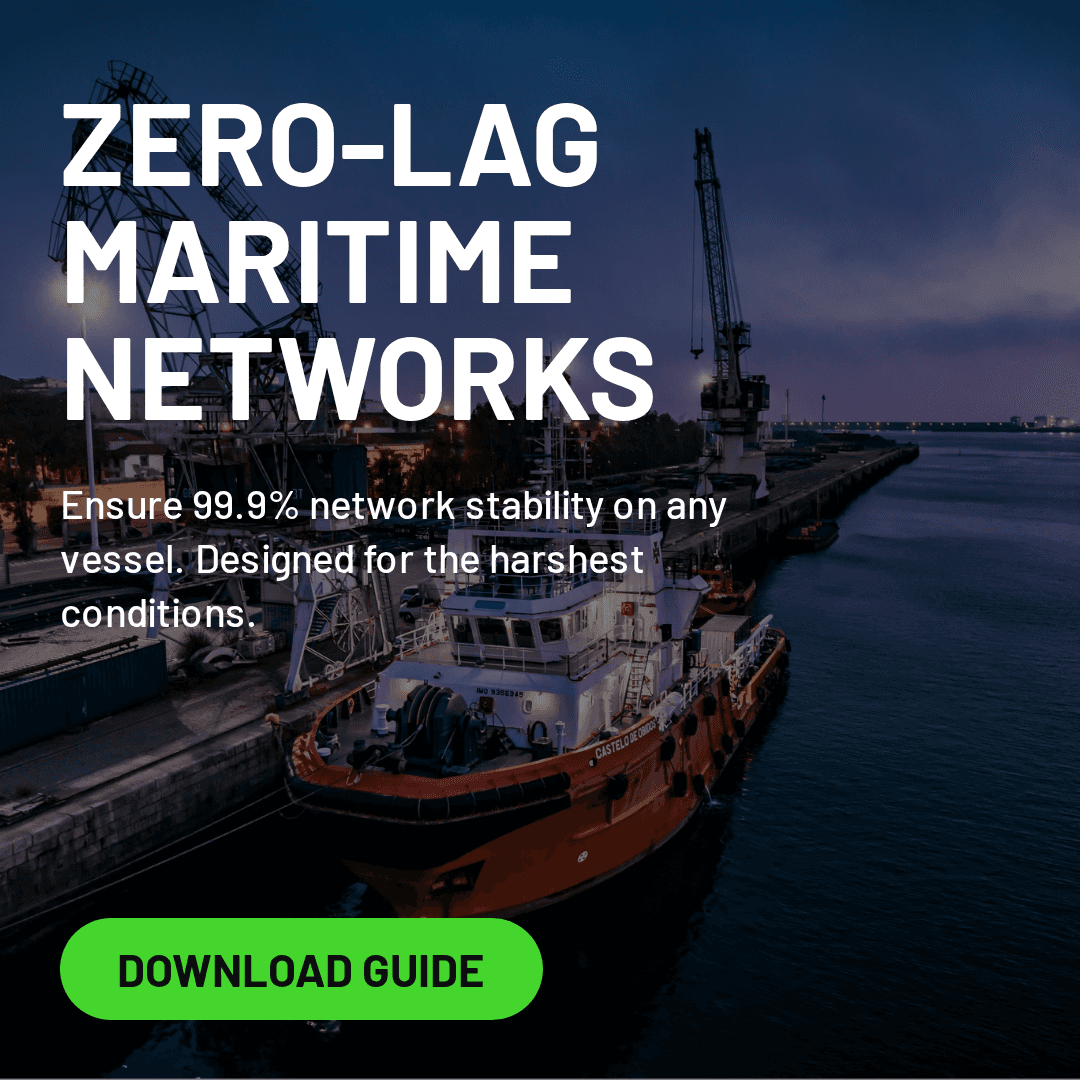
A comprehensive guide to deploying Cisco Meraki in maritime environments.
The maritime industry is currently navigating one of the most profound technological shifts in its history. For decades, the concept of the "connected ship" was constrained by the immutable laws of physics and economics associated with Geostationary (GEO) satellite communications. High latency, prohibitive bandwidth costs, and complex, proprietary hardware created a digital chasm between shore-based operations and the fleet at sea. However, a convergence of three transformative technologies—Low Earth Orbit (LEO) satellite constellations, cloud-managed networking, and edge computing—is rapidly closing this gap. This report provides an exhaustive analysis of deploying Cisco Meraki network infrastructure within this new maritime paradigm.
We explore the integration of Cisco Meraki’s cloud-managed stack with next-generation satellite uplinks from Starlink, Eutelsat OneWeb, and the emerging Amazon Leo (formerly Project Kuiper). The analysis demonstrates how Meraki’s architecture, characterized by centralized visibility and zero-touch provisioning, addresses the unique operational challenges of the maritime sector. We delve into the technical intricacies of optimizing Software-Defined Wide Area Networks (SD-WAN) for high-latency-to-low-latency handovers, the rigorous environmental hardening required for hardware survival in saline atmospheres, and the economic imperatives driving Managed Service Providers (MSPs) toward subscription-based revenue models. By synthesizing technical specifications, real-world case studies, and strategic market analysis, this guide serves as a blueprint for MSIs, vessel operators, and IT decision-makers seeking to modernize the maritime digital estate.
From isolation to integration
To understand the necessity of a Meraki-based architecture, one must first appreciate the operational evolution of the commercial vessel. Historically, a ship was an operational island. Communication was limited to safety-critical messaging (GMDSS) and expensive, low-bandwidth voice calls. The modern vessel, however, is effectively a floating branch office—or in the case of autonomous ships, a floating data center.
The operational imperative for high-bandwidth connectivity
The digitization of shipping is driven by data. Modern engines, scrubbers, and cargo handling systems generate terabytes of telemetry data daily. In the era of "Smart Shipping," this data must be analyzed to optimize fuel consumption, predict mechanical failures before they result in costly downtime, and ensure compliance with increasingly stringent environmental regulations.1
Furthermore, the human element cannot be overstated. Crew welfare has moved from a "nice-to-have" to a critical retention strategy. Seafarers now expect high-speed internet access to communicate with family and consume streaming media, akin to the connectivity they enjoy on land. This bifurcated demand—operational technology (OT) requiring reliability and security, and crew welfare requiring high bandwidth—strains legacy networks. Traditional VSAT (Very Small Aperture Terminal) systems, while reliable, often struggle to provide the sheer throughput required for these competing demands without incurring astronomical costs.
The LEO revolution
The industry's transition is underpinned by the shift from GEO to LEO satellites. GEO satellites orbit at approximately 35,786 kilometers, resulting in a round-trip latency of roughly 600 milliseconds. This latency breaks many modern protocols and makes cloud-based applications sluggish. LEO satellites, orbiting between 500 and 1,200 kilometers, reduce this physical distance dramatically, offering latencies in the 20–50 millisecond range—comparable to terrestrial fiber optics.2
This reduction in latency is the "unlock code" for cloud-managed networking. Platforms like Cisco Meraki rely on a continuous, albeit low-bandwidth, telemetry tunnel between the hardware and the cloud controller. While Meraki devices can function offline, their true value—real-time visibility, remote troubleshooting, and dynamic configuration—is realized when the management plane is responsive. LEO connectivity makes the "Meraki Cloud" experience on a vessel indistinguishable from that of a shore-based office.
The managed service provider opportunity
For MSPs, the maritime sector has historically been a logistical nightmare, characterized by "break-fix" models that require flying highly paid engineers to remote ports to troubleshoot minor configuration errors via a console cable. The Meraki model upends this. By moving the management plane to the cloud, an MSP in London can diagnose a faulty switch port on a container ship in the Suez Canal, apply a firewall rule, or optimize a Wi-Fi channel without a single physical intervention.4 This shift from reactive, physical support to proactive, remote management fundamentally alters the economics of maritime IT, reducing the Total Cost of Ownership (TCO) for shipowners while increasing margins for providers.
Next-Generation satellite uplinks
The efficacy of a Meraki deployment on a vessel is intrinsically linked to the quality of its Wide Area Network (WAN) uplinks. The Meraki MX security appliance serves as the orchestrator, but it requires robust pipes to manage. We analyze the three dominant LEO players shaping this landscape: Starlink, OneWeb, and Amazon Leo.
Starlink; The bandwidth behemoth
Operated by SpaceX, Starlink has disrupted the maritime market through a combination of high bandwidth and aggressive pricing.
Constellation Architecture: Starlink operates thousands of satellites at an altitude of ~550 km. This density allows for persistent coverage even as individual satellites traverse the sky rapidly. Crucially for maritime, newer generations of Starlink satellites utilize inter-satellite laser links, allowing data to hop between satellites over the open ocean until it reaches a ground station, eliminating the need for mid-ocean gateways.3
Performance Profile: Users typically experience download speeds between 100 Mbps and 350 Mbps, with upload speeds around 20–40 Mbps. Latency is consistently low, typically 25–50ms.
Meraki Integration Challenges: Starlink’s architecture utilizes Carrier-Grade Network Address Translation (CGNAT). This means the vessel is not assigned a public IP address, preventing inbound connections initiated from shore (e.g., for accessing a local server). Meraki’s Auto VPN technology is the standard solution here. By initiating a persistent outbound tunnel from the vessel’s MX appliance to a shore-based Meraki concentrator, traffic can flow bidirectionally, effectively bypassing the CGNAT limitation.2
Eutelsat OneWeb; The enterprise standard
OneWeb has taken a different strategic approach, focusing on the enterprise and government markets rather than direct-to-consumer sales.
Orbit and Coverage: OneWeb’s constellation orbits higher, at approximately 1,200 km. While this increases theoretical latency slightly compared to Starlink (sub-100ms vs. sub-40ms), it allows each satellite to cover a larger footprint. OneWeb creates "overlapping coverage zones" that are particularly advantageous for maritime vessels, as they reduce the frequency of handovers between satellites, a common source of jitter in LEO connections.3
SLA and CIR: Unlike Starlink’s "best effort" model, OneWeb offers Committed Information Rates (CIR) and Service Level Agreements (SLAs). For mission-critical vessel operations—such as ECDIS chart updates or remote engine diagnostics—this guarantee is invaluable.
Hardware Robustness: OneWeb utilizes dual-parabolic terminals (like the Intellian OW70M) for maritime deployments. These "primary-primary" setups allow one antenna to track a new satellite while the other maintains the connection with the receding one, ensuring zero packet loss during handovers. This hardware redundancy aligns perfectly with Meraki’s high-availability features.7
Amazon Leo (Project Kuiper); The cloud-native contender
Recently rebranded from Project Kuiper to Amazon Leo, this constellation represents the seamless extension of the cloud to the edge.
Strategic Rebrand: The name change to "Amazon Leo" serves to align the satellite service with its orbital mechanics (Low Earth Orbit) and integrates it more tightly into the Amazon brand family, moving it away from the internal "Project" designation.9
The AWS Advantage: The defining feature of Amazon Leo is its integration with Amazon Web Services (AWS). Traffic from a vessel can be routed directly into the AWS private network backbone without ever touching the public internet.11 For modern vessels running IoT applications that feed into AWS data lakes, this offers superior security and lower latency.
Meraki vMX Synergy: This architecture enables a potent synergy. By deploying a Cisco Meraki Virtual MX (vMX) within the AWS Cloud WAN, vessel operators can extend their SD-WAN fabric directly into their cloud environment. The Amazon Leo link effectively becomes a private Ethernet cable to the data center, managed via the same dashboard as the physical switches on the ship.12
Comparative technical matrix
The following table summarizes the key technical distinctions relevant to a Meraki network architect:
Feature | Starlink Maritime | Eutelsat OneWeb | Amazon Leo (Project Kuiper) |
Orbit Regime | Mid-LEO (~550 km) | High-LEO (~1,200 km) | LEO (~590–630 km) |
Primary Handoff | Ethernet (CGNAT) | Ethernet (Public IP / Private) | Ethernet / AWS PrivateLink |
Latency | 20–40 ms | < 100 ms | 25–50 ms (Target) |
Service Model | Best Effort / High Bandwidth | SLA / CIR / Enterprise | Integrated Cloud / Enterprise |
Meraki Role | Auto VPN for Inbound Access | Traffic Shaping for SLA apps | SD-WAN Extension to AWS |
Hardware Form | Flat Panel Phased Array | Dual Parabolic Domes | Phased Array (Nano/Ultra) |
The Meraki Architecture
A vessel is a hostile environment for electronics. It combines the corrosive properties of saltwater, the vibration of massive diesel engines, and the RF-blocking nature of steel bulkheads. A successful Meraki deployment must account for these physical realities while delivering the logical segmentation required by operations.
MX Security & SD-WAN Appliances
The Meraki MX appliance is the gateway to the world. On a vessel, it performs three critical functions: SD-WAN routing, Next-Generation Firewalling (NGFW), and Traffic Shaping.
SD-WAN Intelligence: The MX monitors the health of all uplinks (Starlink, OneWeb, 5G, VSAT) in real-time. Using "Performance Classes," an administrator can dictate that latency-sensitive traffic (e.g., VoIP calls to the shipping office) must use the path with the lowest jitter (often OneWeb or 5G), while bulk file transfers (e.g., crew movie downloads) are routed to the highest bandwidth link (Starlink).15
Hardware Selection:
Tugs and Small Yachts: The MX67 or MX68 series are compact, fanless (reducing failure points from dust/salt intake), and sufficient for smaller crew sizes.17
Commercial Shipping: Rack-mounted units like the MX85 or MX95 provide the throughput required for gigabit LEO links and offer redundant power supplies, which are crucial given the "dirty power" often found on ships generators.15
MR Access Points
Providing Wi-Fi on a ship is physically challenging. Steel walls create a Faraday cage effect, blocking signals between rooms, while narrow steel corridors act as waveguides, causing multipath interference.
Indoor Coverage: High-density deployment is often necessary because signals do not penetrate walls. A "room-by-room" or "every-other-room" strategy using models like the MR44 or MR56 is common.
Outdoor Survivability: For deck coverage (critical for docking operations and crew welfare), standard APs will fail rapidly. The MR76 and MR86 are specifically designed for this.
Salt Spray Compliance: These units are tested against IEC 60068-2-11 (salt mist) standards. This test involves exposing the unit to a saline fog for hundreds of hours to ensure the enclosure and internal components do not corrode.18
Mounting Best Practices: Even with an IP67 rating, the mounting hardware is a weak point. Integrators must use 316-grade stainless steel mounts and isolate the AP from the steel superstructure using dielectric spacers to prevent galvanic corrosion.20
MG Gateways
While satellites cover the ocean, cellular networks (4G/5G) are often the primary link in coastal waters and ports.
The Coaxial Problem: Traditional setups use a router below deck with a coaxial cable running to an antenna on the mast. Coaxial cable suffers significant signal loss (attenuation) over long runs, especially at high 5G frequencies.
The MG Solution: The Meraki MG51/MG52 gateways solve this by converting the cellular signal to Ethernet at the edge. The MG device is mounted high on the mast (where the signal is strongest), and a standard Ethernet cable (which suffers no signal loss) runs down to the MX router. This allows the vessel to utilize 5G speeds (up to gigabit rates with the MG52’s 5G Standalone capability) when near shore, effectively offloading terabytes of data cheaply before switching to satellite.21
MV Cameras and MT Sensors
Edge Storage: Meraki MV cameras store video locally on the device, not in the cloud. This is a critical architectural advantage for maritime. It means high-definition video recording does not consume precious satellite bandwidth. Bandwidth is only used when a user actively views a stream remotely.4
Environmental Monitoring: MT sensors can be deployed in cargo holds to monitor temperature/humidity (MT10) or in bilge areas to detect water leaks (MT12). These battery-operated sensors connect via Bluetooth Low Energy (BLE) to the MR access points, requiring no additional cabling infrastructure.23
Technical Implementation Guide
Deploying Meraki in a maritime environment involves specific configuration steps that differ from a standard office deployment.
Solving the MTU/MSS fragmentation issue
One of the most persistent technical challenges in LEO satellite integration is packet fragmentation.
The Physics of the Problem: Standard Ethernet frames have a Maximum Transmission Unit (MTU) of 1500 bytes. However, satellite connections often wrap traffic in additional tunneling protocols (like GTP in OneWeb). Furthermore, the Meraki Auto VPN adds its own IPsec headers (typically 50-60 bytes). If a 1500-byte packet attempts to traverse this "tunnel within a tunnel," it exceeds the available space and must be fragmented or dropped.24
Symptoms: Users may experience slow page loads, failed file transfers, or inability to connect to certain secure (HTTPS) sites, even though "ping" tests work fine.
Troubleshooting Workflow: Integrators must determine the optimal MTU by performing a ping sweep with the "Do Not Fragment" (DF) bit set.
Windows Command:
ping www.google.com -f -l 1472Linux/Mac Command:
ping www.google.com -s 1472 -DIf the ping fails, reduce the size (1462, 1452, etc.) until it passes.
Configuration Fix: Once the optimal size is found (often around 1350-1400 bytes for satellite + VPN), the Meraki MX WAN interface MTU must be adjusted. While some adjustments can be made in the dashboard, setting the hardware MTU on the WAN port often requires contacting Meraki Support to push a backend configuration change.25 Additionally, enabling "MSS Clamping" on the MX ensures that TCP sessions negotiate a segment size that fits within the tunnel.27
Traffic Shaping and Quality of Service (QoS)
Bandwidth on a ship is a finite resource that must be ruthlessly managed.
Category 1: Critical Operations (High Priority/Uncapped)
Protocols: GMDSS data, ECDIS chart updates, Telemetry (Engine monitoring).
Configuration: Map to specific VLANs (e.g., VLAN 10) and assign "Platinum" QoS tags.
Category 2: Business Operations (Medium Priority)
Protocols: Email, VOIP, Corporate ERP access.
Configuration: Prioritize VoIP traffic (DSCP 46/EF) to ensure clear calls over satellite.28
Category 3: Crew Welfare (Low Priority/Capped)
Protocols: Netflix, YouTube, Social Media.
Configuration: Apply Layer 7 firewall rules to block high-bandwidth categories during working hours. Set a per-client bandwidth limit (e.g., 2 Mbps down / 0.5 Mbps up) to prevent a single user from saturating the Starlink link.29
Hub-and-Spoke vs. Mesh
For a shipping company with a fleet of vessels, the VPN topology is crucial.
Hub-and-Spoke: This is the recommended topology. Each vessel (Spoke) connects to a central HQ or Data Center (Hub). This minimizes the VPN overhead on the vessel's MX and centralizes security inspection at the HQ.
Mesh: While Meraki supports full mesh (every site connects to every site), this is generally discouraged for large fleets over satellite. The management overhead and "chatter" of dynamic routing protocols (OSPF/BGP) across hundreds of high-latency links can consume significant bandwidth unnecessarily.15
Economics and Strategy
The adoption of Meraki is not just a technical decision; it is a financial strategy that addresses the specific cost structures of the maritime industry.
The cost of downtime
In maritime operations, IT downtime is not merely an inconvenience; it is a massive financial liability.
Offshore Support Vessels (OSV): Downtime can halt oil & gas operations, costing upwards of $25,000 per day in lost productivity.
Commercial Shipping: A vessel unable to transmit its manifest due to a network error may be denied entry to port, incurring demurrage charges that can run into tens of thousands of dollars per day.30
The Meraki Advantage: The ability for an MSP to remotely troubleshoot a network issue in minutes versus days (waiting for a technician to fly out) directly mitigates this risk. The ROI of a Meraki subscription is often justified by the prevention of a single day of vessel downtime.
Capex vs. Opex
The maritime industry is historically Capex-heavy, but there is a shift toward Opex models to improve cash flow.
Co-Termination: Meraki’s co-termination model is ideal for fleets. It aligns the licensing of all devices (across 50 ships) to a single expiration date. This simplifies procurement, preventing a scenario where a specific ship loses connectivity because its license expired mid-voyage.32
The Safety Net: "Amber Mode": A common fear among shipowners is, "What happens if my subscription expires while the ship is in the middle of the Pacific?" Meraki’s "Amber Mode" addresses this. If a license lapses, the network does not cease to function. The hardware continues to pass traffic and enforce the last known configuration. The administrator loses access to the dashboard (management plane), but the vessel maintains its operational capability. This safety feature is critical for maritime safety.32
Lifetime Warranty and Logistics
Indoor vs. Outdoor Warranty: It is vital for MSPs to note the warranty distinction. Meraki Indoor APs and Switches typically carry a Limited Lifetime Warranty. However, Outdoor APs (MR76/86) usually carry a 1-Year Warranty. Given the harsh marine environment, purchasing extended support ("Meraki Now" or Cisco Smart Net) for outdoor units is a necessary insurance policy.33
Global RMA: Cisco’s global supply chain allows for replacement hardware to be shipped to a forward logistics center at the vessel’s next port of call, minimizing the complex customs procedures often associated with shipping electronics internationally.17
Real-World Case Studies
The connected tug boat
Port Taranaki in New Zealand exemplifies the "Connected Vessel" concept on a smaller scale.
Challenge: Tugboats required persistent connection to the port’s corporate network for job dispatch and compliance logging. Legacy Wi-Fi was spotty, and 4G was unreliable offshore.
Solution: The port deployed Meraki MX64W security appliances on the tugs. These units managed uplinks from long-range shore Wi-Fi and cellular networks.
Outcome: The cloud-managed architecture allowed the IT team to treat the tugs as simply "another room in the building." Firmware updates were scheduled remotely during downtime, and troubleshooting was handled from the shore office. The deployment improved crew safety and operational efficiency without requiring IT staff to board the vessels.17
Autonomous surface ships (MASS)
In the realm of autonomous shipping, connectivity is mission-critical. Trials of Maritime Autonomous Surface Ships (MASS) rely on Meraki as the "nervous system" of the vessel.
Meraki switches and routers aggregate data from LIDAR, Radar, and visual sensors. This data is prioritized via SD-WAN to ensure that critical collision-avoidance telemetry is transmitted to shore-based control centers with the highest priority over LEO links. The "dashboard" provides the remote operator with instant visibility into the health of the vessel’s network infrastructure, a prerequisite for unmanned operations.1
The superyacht sector
Luxury yachts present a dual challenge: high-demand guest entertainment and rigorous privacy.
Guest Experience: Owners expect to stream 4K content and conduct Zoom calls seamlessly. Meraki’s Layer 7 traffic shaping allows the captain to prioritize the owner's traffic over the crew's, ensuring the "Guest Experience" is never compromised.
Security: High-Net-Worth Individuals (HNWIs) are targets for cyber espionage. Meraki’s "Air Marshal" feature scans for rogue access points (e.g., a paparazzi drone attempting to snoop on the Wi-Fi) and can contain them, ensuring the digital privacy of the vessel.35
Strategic recommendations for MSPs and integrators
For Managed Service Providers looking to enter or expand in the maritime sector, the Cisco Meraki + LEO combination offers a compelling product roadmap.
Developing the "Vessel-in-a-Box" solution
MSPs should productize a standardized hardware stack (e.g., "The Tanker Stack" vs. "The Yacht Stack").
Standardization: Use templates in the Meraki Dashboard. A change made to the "Tanker Fleet Template" automatically propagates to all 50 vessels in that fleet. This scalability is the key to high-margin managed services.36
Pre-Staging: Configure the entire network in the lab. Scan the serial numbers into the dashboard, apply the configuration template, and ship the "Vessel-in-a-Box" to the shipyard. The installation then becomes a simple "plug-and-go" operation for the onboard electrician, reducing the need for specialized IT travel.
Monetizing the Support Lifecycle
The subscription model allows MSPs to move away from hourly billing to value-based monthly retainers.
Tiered Support: Offer "Gold/Silver/Bronze" packages.
Bronze: License management and basic monitoring.
Silver: Traffic shaping, firmware management, and monthly reporting.
Gold: 24/7 proactive monitoring, immediate RMA handling, and "virtual CIO" strategic planning.37
Value-Add Services: Use the data from the Meraki dashboard to provide insights. For example, report on "Crew Wellness" based on internet usage patterns or "Operational Efficiency" based on the connectivity uptime of IoT sensors.
The Course Ahead
The maritime industry is no longer cut off from the digital world. The combination of LEO satellite constellations like Starlink, OneWeb, and Amazon Leo provides the "fiber-in-the-sky" connectivity that modern vessels demand. Cisco Meraki provides the intelligent, cloud-managed infrastructure to harness this bandwidth effectively.
For the shipowner, this architecture delivers the visibility and control of a shore-based office. For the MSP, it transforms maritime IT from a logistical headache into a scalable, high-revenue business line. As ships become smarter, more autonomous, and more data-driven, the network that connects them becomes the most critical asset onboard. The "Connected Vessel," powered by Meraki and LEO satellites, is no longer a future concept—it is the new standard of maritime operations.
Technical Appendix: Configuration Best Practices
A. Maritime MTU Optimization Table
Recommended settings for minimizing fragmentation on LEO links.
Connection Type | Standard MTU | Rec. Hardware MTU | Rec. MSS Clamping | Notes |
Starlink (Maritime) | 1500 | 1500 | 1350 | CGNAT generally handles fragmentation well, but clamping ensures TCP stability. |
OneWeb (Enterprise) | 1500 | 1350 - 1400 | 1300 | Overhead from GTP tunnels often requires aggressive MTU reduction.27 |
IPsec VPN (AutoVPN) | N/A | N/A | 1300 | VPN headers consume ~60-80 bytes. Lower MSS prevents packet drops inside the tunnel. |
B. Environmental Hardening Checklist
Corrosion Prevention: Apply Tef-Gel or similar anti-seize to all stainless steel bolts to prevent galling and corrosion. Use dielectric grease on all RJ45 and N-Type connectors.
Vibration Dampening: Mount rack equipment using rubber isolation washers. Use locking nuts (Nyloc) on all structural mounts.
Power Conditioning: Always install an Online Double-Conversion UPS upstream of the Meraki rack. Ship generators can produce voltage spikes that damage sensitive silicon.
C. Traffic Shaping Policy Example (Maritime Template)
Traffic Class | Definition | Bandwidth Limit | Priority | DSCP Tag |
Safety of Life | GMDSS, Telemedicine | Unlimited | High | 46 (EF) |
Ship Operations | ECDIS, PMS, Email | Unlimited | High | 26 (AF31) |
Crew Calling | WhatsApp Audio, Skype | 128 Kbps | Normal | 18 (AF21) |
Crew Streaming | Netflix, YouTube | 2 Mbps (Per User) | Low | 0 (BE) |
Software Updates | Windows Update, iOS | 1 Mbps (Global) | Low | 0 (BE) |

Elevate Your Experience. Get Started Now!

Schedule a call with our awesome team !